Replacing the login on two live products without anyone noticing
The one-line version
The company was going for ISO certification, and the gap was authentication: no multi-factor, and two products each holding their own login. The fix was a single identity provider both products delegate to — which sounds like new-feature work but is mostly the opposite. The first release had to change nothing a user could perceive except the domain in the address bar. Everything interesting about it is a constraint rather than a feature: ship an identity provider that nobody notices, then add MFA on top of it once it's load-bearing.
I designed the screens and built the front end.
Context
Compass is a cloud phone platform sold through resellers. Studio and Bridge, its two front ends, each authenticated on their own — meaning MFA would need to be built twice, kept consistent twice, and would still leave no single sign-on.
The sign-in service is the third application: a standalone Next.js app that owns sign-in for both. It runs OAuth2 and OIDC flows through Ory Hydra and authenticates against Ory Kratos, so credentials and second factors live in one place with one implementation. Studio and Bridge become OAuth clients that redirect to it.
Single sign-on and federated login were explicitly out of scope for this release, but OIDC was chosen specifically so they become possible later without another migration.
It is the newest of the three and the only one I built from an empty repository.
Designing it first
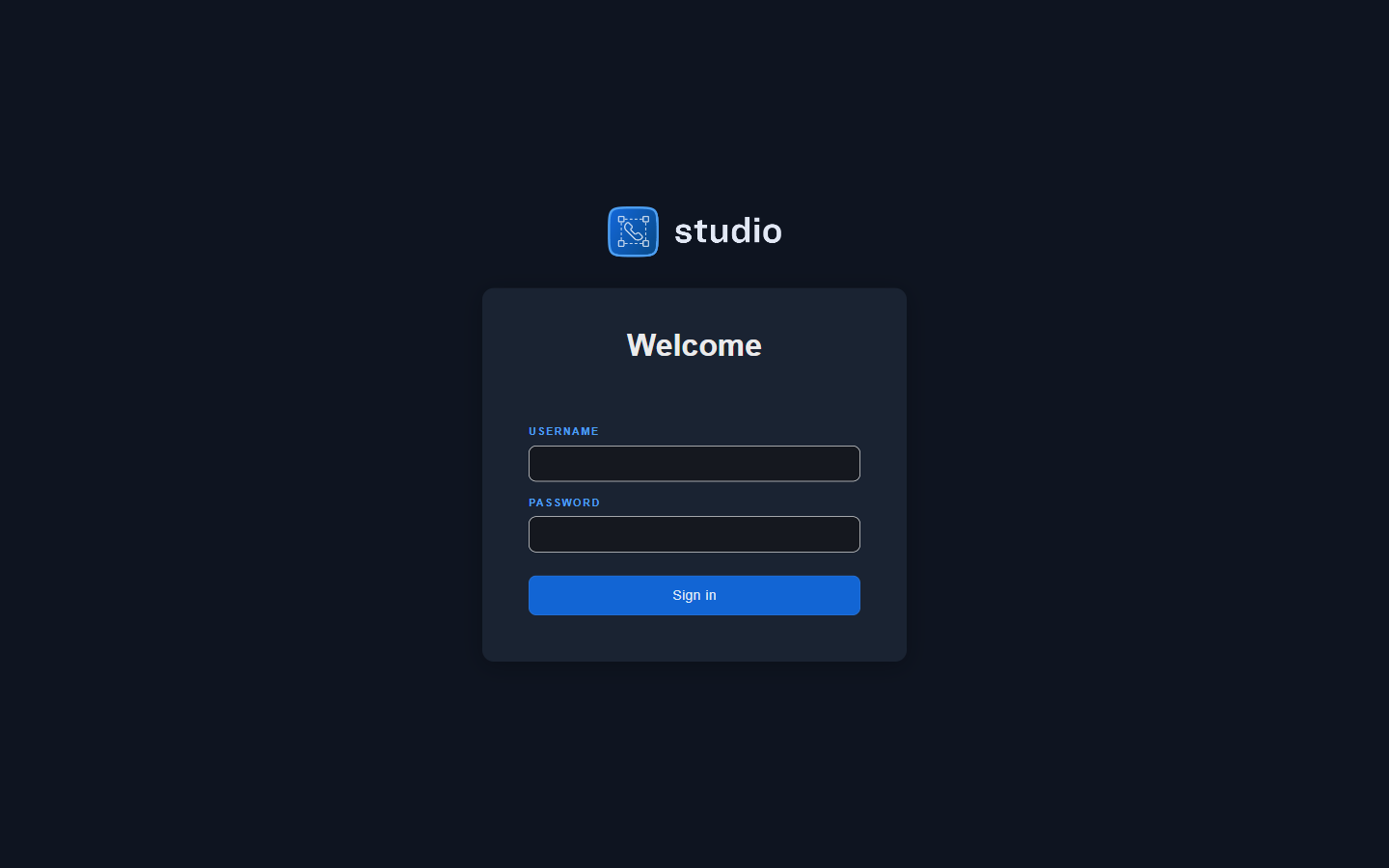
Before any application code, I produced mockups for every screen: sign-in, MFA challenge, MFA setup, error, logout confirmation, the post-logout landing page, and three Studio-side screens for administering MFA on a user's account.
They were static HTML rather than a design tool, and that was the useful decision. The
shared stylesheet behind them is a direct extraction of Studio's own component layer —
the same buttons, inputs and cards, with the per-brand palette lifted into CSS custom
properties so switching a class on <body> previews another reseller. The mockups weren't
an approximation someone would have to interpret; they were production's components, in a
browser, at a URL anyone could open. Porting them into the real app later was mostly moving
the file.
Each screen stacked all of its states vertically on one page — empty, filled, every error — so a reviewer could scan the whole surface in one scroll.
I put that in front of stakeholders across engineering, product and account management, and folded their feedback back into the design:
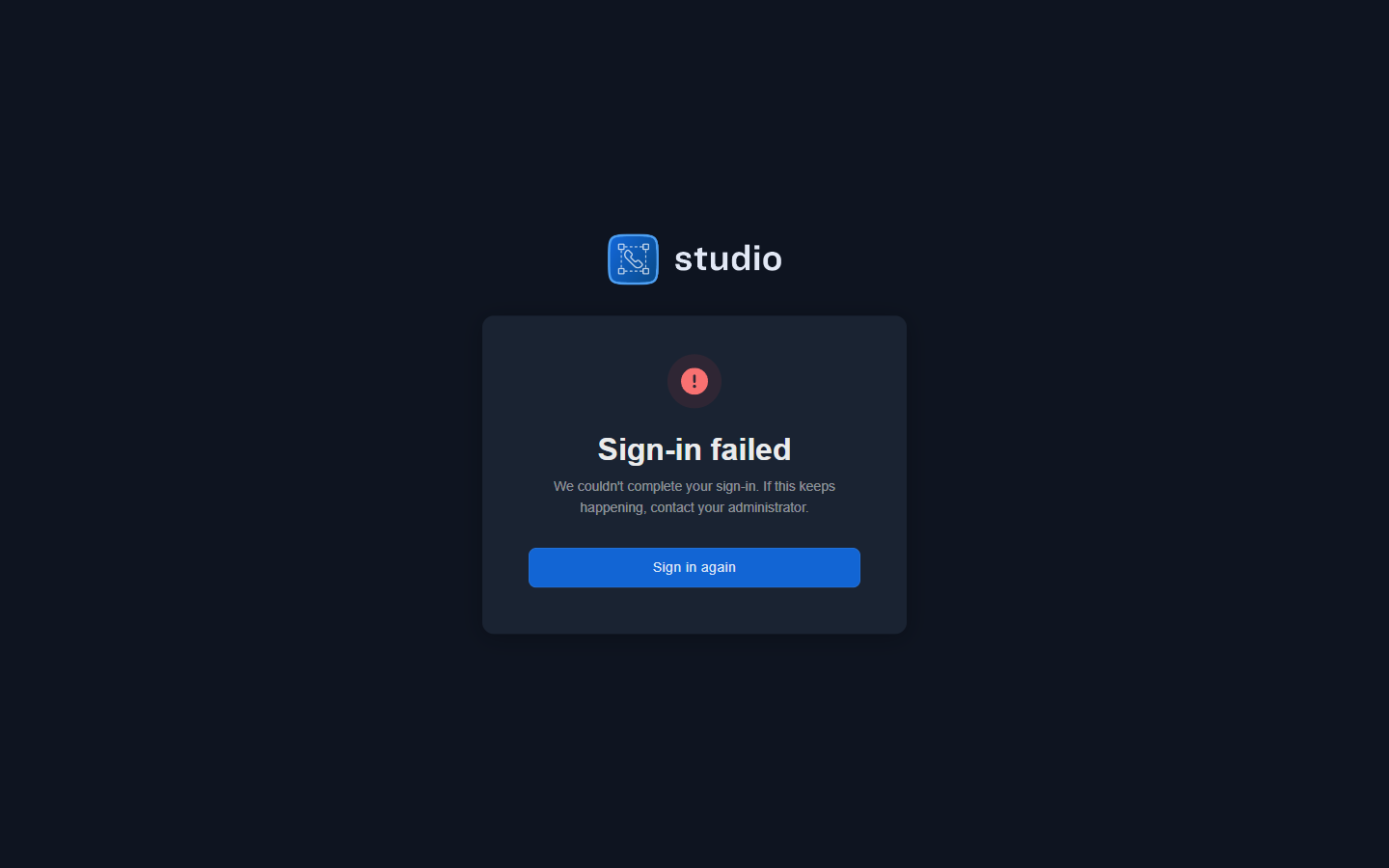
- The error page verb. "Try again" was consistent but didn't say what the button does — restart the sign-in flow. It became "Sign in again", and "Sign in" replaced "Log on" across the product.
- The logout screen listed every application you were signed into, to show that signing out was global. That's more detail than a user needs, and it became one sentence.
- Localisation. I'd scaffolded i18n and populated English only; 80–90% of end users are Dutch speakers, so that became its own piece of work.
- The expired-session page auto-redirected after a five-second countdown — cut, because a user who walks away from an expiring session shouldn't come back to one that's silently expired a second time.
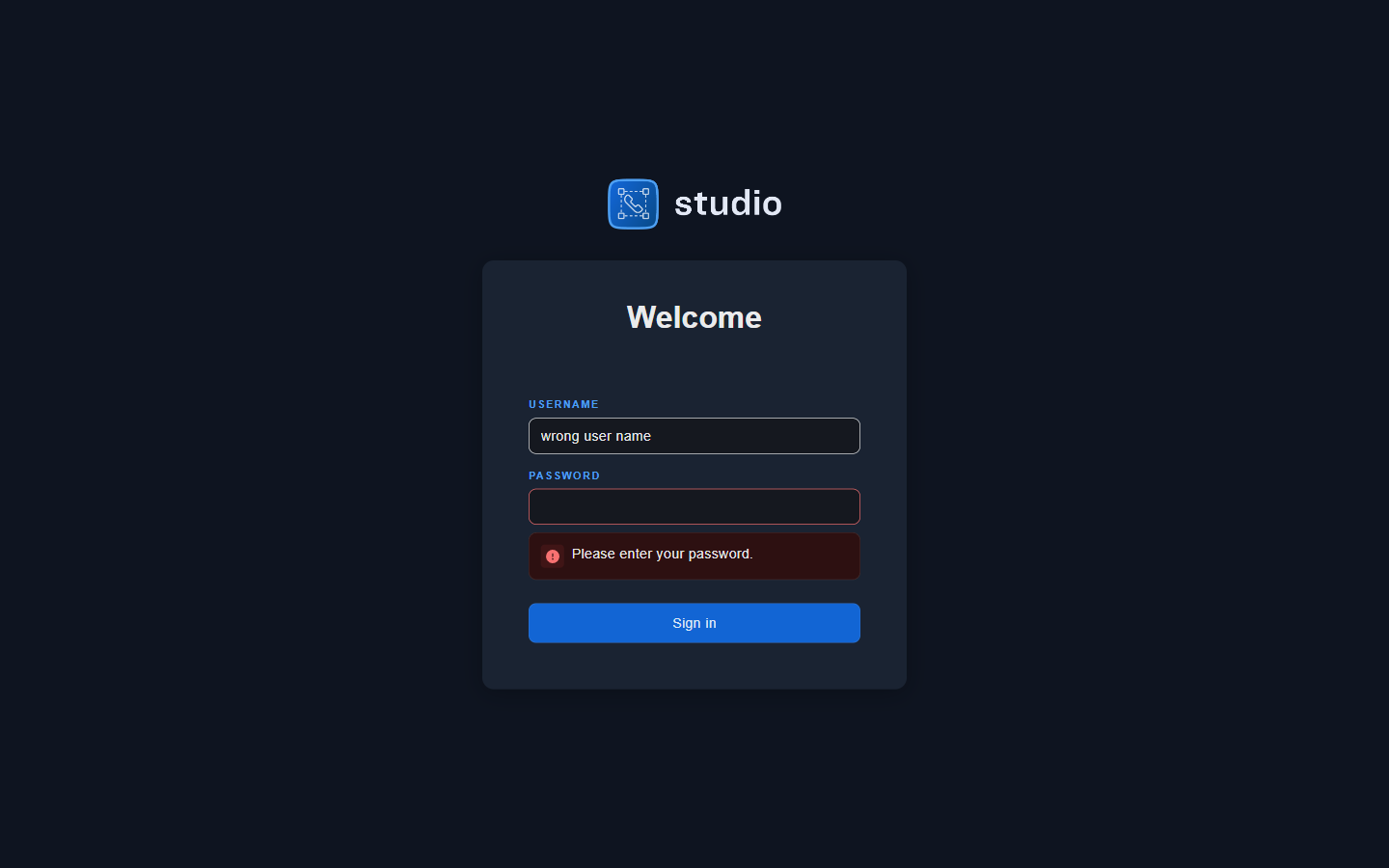
The error model that came out of this review is a rule rather than a set of cases: if the user can fix it right now — wrong password, wrong TOTP code — it renders inline and the flow survives. If the flow itself is gone, that's a terminal page with a route back to the application they started from. What an error is allowed to reveal is deliberately thin: a failed sign-in doesn't say which half you got wrong.
Theming from one deployment
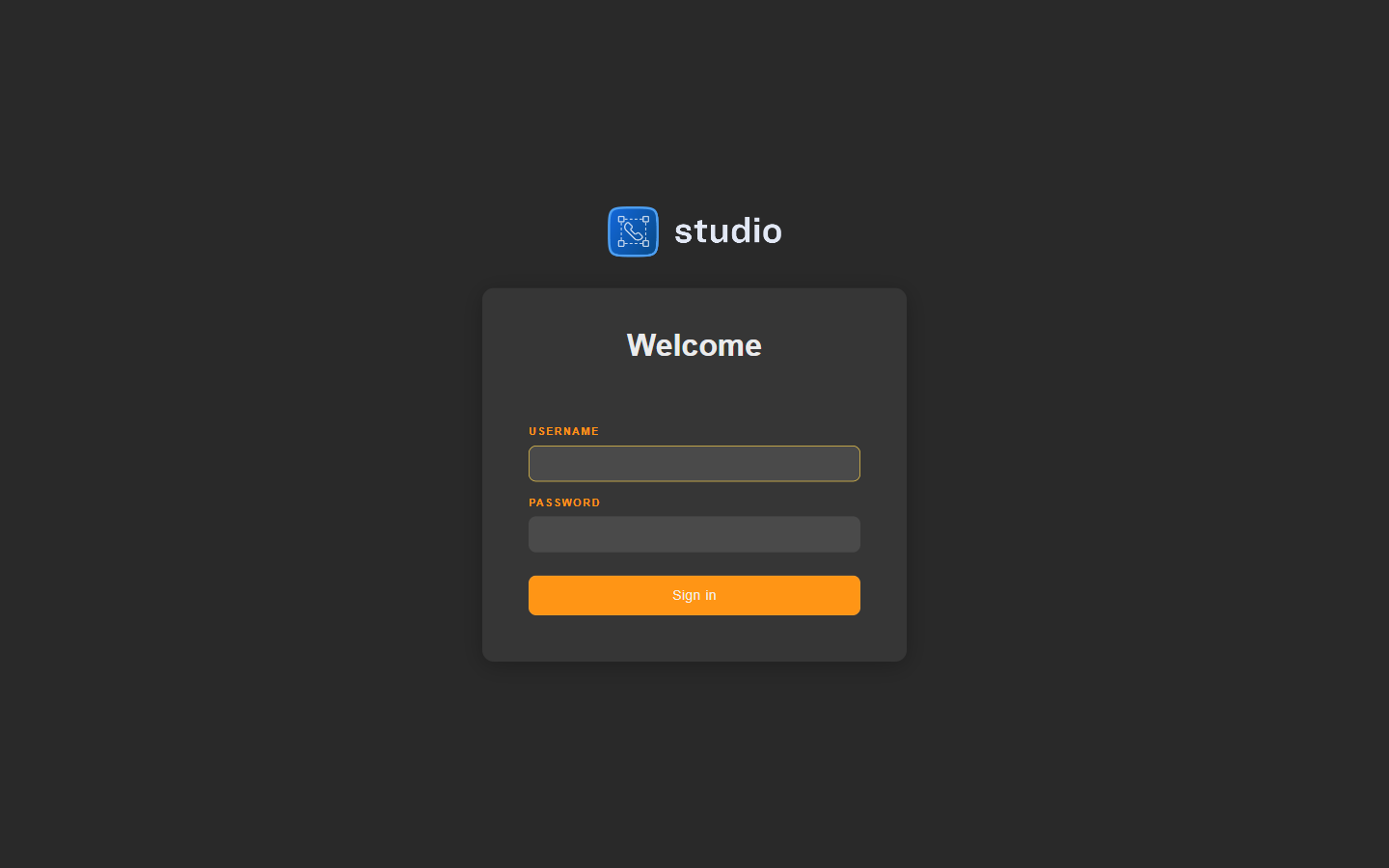
One deployment serves every reseller. The brand is resolved per request from the hostname,
matched against a table of domains, longest match winning. Everything downstream —
palette, logo, its dimensions — follows from that one lookup, set by a theme class on
<body>.
QA needs to preview a brand on a host that doesn't resolve to it, so there's a ?theme=
override — but sign-in leaves the application and comes back through Kratos, and a query
parameter doesn't survive that round trip. The override is written to a cookie on first
sight and re-read on the way back, so it persists across the redirect chain. Resolution
order: explicit override, then cookie, then hostname.
MFA
The challenge and its setup flow live inside Kratos's own model rather than as routes of their own: the TOTP challenge is a login flow requesting a higher assurance level, and setup is a settings flow. The implementation branches on what the flow asks for, not on where the user is in it.
A wrong code follows the same rule as a wrong password — fixable right now, so it stays on the page and the flow survives — with a message that says only that the code didn't match.
The harder problem: Kratos has no way to force a user to set up MFA. You can require a second factor at sign-in, but not that one exists. So the gate sits at the consent step — the moment an OAuth session would be issued — and refuses to issue one while enrolment is outstanding, diverting the user into setup and resuming the original flow afterwards.
It defers rather than traps: "Cancel and set up later" exists because a user locked out at sign-in with no way past is a support call. The pending challenge crosses the detour in a short-lived HttpOnly cookie, since Kratos hands control back with only a flow ID — but that cookie only ever selects which challenge to resume. Whether enrolment is actually complete is re-checked against Kratos every time: a cookie deciding whether you get a token is a vulnerability, not a convenience.